How we check that every level can be solved
Updated: November 27, 2026 · Gizo Game
Nothing breaks the trust between a player and a puzzle game like a level that cannot be finished. You try for twenty minutes, you feel clever and stubborn, and then you find out that nobody could have done it.
We would rather that never happens on Gizo Game. So for many of our games we do not just design levels and hope. We test them, and this page explains how.
A solver is a tireless tester
For puzzle games, we write a program called a solver that plays the game for us. It tries moves and keeps track of what happens until it either finds a way to win or proves that no way exists. A human tester gets tired after a few levels. A solver can try every level, every time we change the game.
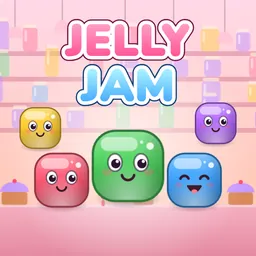
Jelly Jam: exhaustive search
Jelly Jam is the clearest example. Its 80 levels are all solved by an exhaustive search, which means the solver looked at every possible sequence of swipes. That does two things. It proves each level can be solved, and it finds the shortest solution, which becomes the level's par. The tests also check that no shorter solution exists for any par, so when the game shows a par, that number really is the best that can be done.
Replaying solutions in the real game
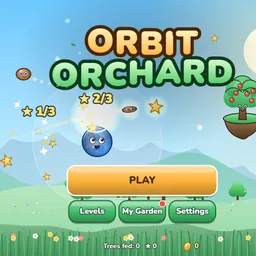
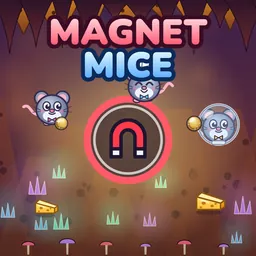
Physics games are harder to prove on paper, because a slingshot shot depends on exact numbers. For Orbit Orchard, Magnet Mice and Hop Harbor, an automatic solver found the solutions and then the game's own tests replayed them in the real simulation, the same code that runs when you play. If a replay failed to win, the test failed and the level had to be fixed. In Orbit Orchard that includes checking that all three stars are reachable.
Checking par and fairness
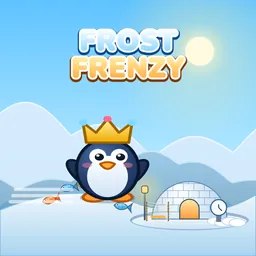
In Frost Frenzy every level is checked by a solver for solvability and par. Pulsepath's 18 levels are each verified to be solvable too, and its deaths are designed to be fair: the game shows the cause and respawns you in about a third of a second. Gizo Gears' 60 mechanical puzzles are verified in the same way. In several games the hint button draws on those same verified solutions, so a hint always points at a real move.
What this does not mean
A solvable level is not necessarily an easy one. Late levels in Orbit Orchard, for example, leave little room for error, and we say so on the game page. The promise is that the problem is fair: if you cannot solve it, it is because you have not found the answer yet, not because there is none.
It also does not replace a human. Every game is also played by us before it goes live, checking the controls, different screen sizes and performance. The solver tells us a level can be won; only a person can tell us whether it is fun.
If you find a problem
Despite all this, we can make mistakes. If a level seems impossible or a control feels wrong, use the Report a problem button on the game page or write to us from the contact page. We read every message.