Logic puzzles: how to plan backwards and stop guessing
Updated: November 27, 2026 · Gizo Game
A good logic puzzle has exactly one lesson in each level, and your job is to find it. When people say a puzzle is hard, it is usually because they are trying moves instead of thinking about the structure.
Here is how we approach three of our own logic games, and what the habits have in common.
Lot Lock: work backwards
Lot Lock puts you in a jammed night-city parking lot where you must send cars out in the right order. Before you tap anything, think backwards from a car through everything that blocks it. Which blocker has to leave first? Once you know the answer for one car, the next question answers itself.
The rules add up over 150 levels: closing gates, even/odd gates, keys and barriers, one-way lanes and numbered target cars. With a closing gate, your budget matters, because even a car that has nothing to do with the gate spends one of your exits. On even/odd gates, interleave your exits: first work out which exit number the gated car needs. A Dead End warning rewinds for free, but planning your order before it happens is what earns the stars.
Frost Frenzy: map first, slide second
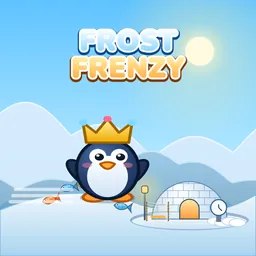
In Frost Frenzy a penguin slides until it hits something, and you need to collect every fish and reach the igloo. The best advice is to find all the fish and the igloo first, and not to start sliding until you can guess where each wall will stop you.
Undo is unlimited and an undone move comes off your count, so you can test a direction and press SPACE if it does not work. Falling in the water or bumping a seal, however, adds to your move count. Watch the dashed line that marks a seal's path: it advances one step for every cell the penguin crosses, and if you do not move it stays put. Cracked ice only holds once, because it becomes water after you leave, so plan your way back.
Gizo Gears: make the teeth mesh
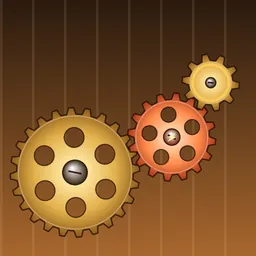
Gizo Gears asks you to place gears on pegs and carry the motor's spin to a bell or target. Start by placing the gear next to the motor and extend the chain toward the target, then try which size fits the gap. Gears turn each other only when they sit at a distance where their teeth mesh. If a peg is too far or too close, try a different size; there are three, with 10, 16 and 24 teeth.
If an arrow shows the wrong direction, add or remove a gear in the chain, because every new gear flips the direction. A belt turns two pegs the same way, so the logic changes in belt sections.
What the three have in common
Each game gives you a way to experiment cheaply, with undo, rewinds or a hint. Use it, but only after you have a theory. Say out loud what you think will happen, then try it. If the result surprises you, you have learned something about the rules, which is the whole reward of a logic puzzle.